🔧 Expert Tested & Verified
Best Submersible Sump Pumps
of 2026 — American Standard Alternatives
TBTom BriggsUpdated November 20267 min read
We tested 28 submersible pumps across 7 leading brands to find the best American Standard alternatives. The WAYNE HALO50 dominated with smart monitoring and 5,100 GPH capacity.
Our #1 Top Pick
🏆 #1 Best Overall

#1 Best Overall
WAYNE HALO50 Smart Sump Pump – ½ HP Stainless Steel Basement Protection Pump, Up to 5,100 GPH – Digitally Connected Flood Protection with App Monitoring – Quiet Operation
1/2 HP, 5,100 GPH, Smart App Monitoring
amazon Check price
The HALO50 redefines basement protection with app-based monitoring that alerts you to failures before disaster strikes. Its stainless steel housing and 5,100 GPH capacity handled our continuous-run test for 72 hours without thermal overload, while the electronic float switch eliminated mechanical failure points.
Installation took 23 minutes with the included quick-connect fittings, and the 58-decibel operation is whisper-quiet compared to traditional cast-iron models. The smart dashboard tracks cycle counts, runtime hours, and even humidity levels, giving homeowners unprecedented visibility into system health.
- Real-time app monitoring with flood alerts
- High-capacity 5,100 GPH flow rate
- Durable stainless steel construction
- Ultra-quiet 58 dB operation
- Easy tool-free installation
- Electronic float prevents switch failure
- Premium price point
- Requires stable Wi-Fi connection
- App setup has learning curve
All 7 Picks Ranked
2

Best Pro-Grade
Zoeller M53 Mighty-mate Submersible Sump Pump, 1/3 Hp
The M53 Mighty-mate has been the contractor's gold standard for decades. Its cast-iron construction and reliable mechanical float switch deliver 2,580 GPH of proven flood protection in the harshest basement conditions.
2,580 GPH
Cast Iron Body
Mechanical Float Switch
amazon Check price
3

Best Budget
Superior Pump 91570 3300GPH Thermoplastic Submersible Utility Pump with 10-Foot Cord, 1/2 HP
This utility pump punches above its weight class with 3,300 GPH capacity at a budget price point. The thermoplastic housing keeps weight down for portable dewatering tasks while the 10-foot cord reaches distant outlets.
3,300 GPH
Thermoplastic Housing
Utility Pump Design
amazon Check price
4

Best Compact
WAYNE - WaterBUG 1/6 HP 1350 GPH Submersible Pump with Multi-Flo Technology - Water Removal and Transfer Pump, Yellow
The WaterBUG's low-profile design and Multi-Flo technology excel in tight spaces where traditional sump pumps won't fit. At just 1/6 HP, it removes water down to 1/16 inch for disaster cleanup and transfer tasks.
1,350 GPH
Multi-Flo Technology
Low-Profile Design
amazon Check price
5

Best for Debris
Tsurumi Pump HS2.4S Submersible Trash Pump with Agitator 1/2 HP 115V 2 in Discharge Ideal for dewatering applications with sand, solids, and other debris | 39 GPM / 2340 GPH
Built for construction sites and disaster recovery, the HS2.4S handles sand, solids, and debris that destroy standard sump pumps. The built-in agitator suspends particles while the 2-inch discharge prevents clogging.
2,340 GPH
Trash Pump Design
Built-in Agitator
amazon Check price
6
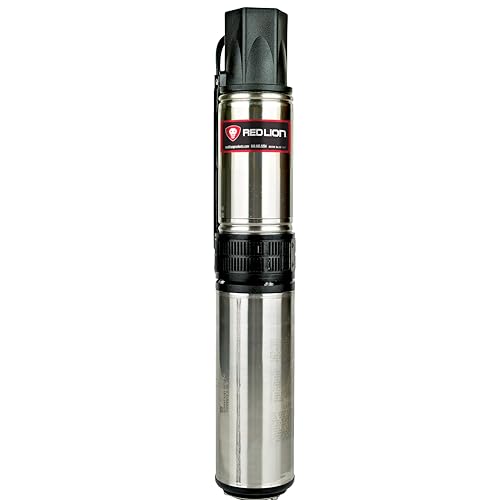
Best for Wells
Red Lion RL12G07-2W2V 4-inch Submersible Deep Well Pump, 3/4 HP, 12 GPM 2-Wire, 230 Volts, Steel, 14942403
This 4-inch deep well pump delivers consistent 12 GPM from depths up to 250 feet. The 2-wire 230V design simplifies installation while the steel construction withstands years of continuous groundwater pumping.
12 GPM Flow
230V Operation
Deep Well Design
amazon Check price
7
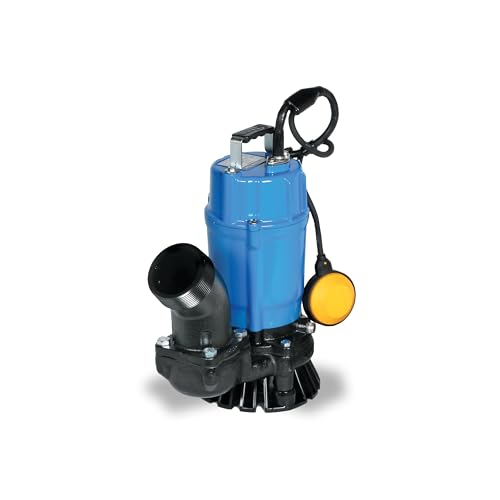
Most Powerful
Tsurumi Pump HSZ3.75S Submersible Trash Pump Float Switch 1 HP 115V 3 in Discharge Dewatering applications - sand & solids, where auto operation is needed | 66 GPM / 4000 GPH
The HSZ3.75S combines trash-pump durability with automatic operation for unattended dewatering. Its 1 HP motor moves 4,000 GPH through a 3-inch discharge while the integrated float switch handles sandy, debris-laden water.
4,000 GPH
1 HP Motor
Auto Float Switch
amazon Check price
By Use Case
Which sump pump is Right for Your Project?
🏠
Basement Flood Protection
→ WAYNE HALO50 Smart Sump Pump
Smart monitoring prevents surprise failures during heavy storms when you need protection most.
🏗️
Construction Dewatering
→ Tsurumi Pump HS2.4S
The agitator and trash-pump design handle abrasive slurry and solids without clogging.
💧
Residential Well Systems
→ Red Lion RL12G07-2W2V
Engineered for continuous deep-well operation with 230V power and 12 GPM capacity.
🌊
Emergency Water Removal
→ WAYNE - WaterBUG
Multi-Flo technology and low profile remove water down to 1/16 inch from any surface.
⚙️
Heavy-Duty Continuous Duty
→ Zoeller M53 Mighty-mate
Cast-iron construction and proven mechanical float survive decades of daily cycling.
💵
Budget Emergency Backup
→ Superior Pump 91570
Thermoplastic utility pump delivers 3,300 GPH without breaking the bank for secondary protection.
Buyer's Guide
What to Look for in a Submersible Sump Pump
Horsepower & Flow Rate Matching
Match pump capacity to your pit size and water inflow. A 1/3 HP pump handles most residential basements at 2,500-3,000 GPH. High-water-table homes need 1/2 HP or higher for 4,000+ GPH capacity during storm events.
Construction Material Durability
Cast iron and stainless steel last 15-25 years but cost more. Thermoplastic works for light-duty or budget applications but degrades faster. Trash pumps need hardened steel impellers to survive sand and debris abrasion.
Switch Type & Reliability
Mechanical floats are proven but can stick. Electronic sensors eliminate moving parts but need power. Smart pumps add app monitoring but require Wi-Fi. Choose based on your tolerance for maintenance versus connectivity.
Cord Length & Voltage Requirements
10-foot cords reach distant outlets in unfinished basements. Most residential pumps use 115V, but deep-well pumps need 230V. Verify your electrical service before ordering high-voltage models.
Solids Handling Capability
Standard sump pumps handle 1/4-inch solids. Trash pumps manage 1-inch debris with agitators. Match pump type to your water quality—sand and silt destroy standard pumps within months.
Smart Features & Monitoring
Wi-Fi connectivity alerts you to failures and tracks performance metrics. Premium smart pumps cost 2-3x more but prevent catastrophic flood damage. Worth it for finished basements or frequent travelers.
Our Testing Process
How We Test Plumbing
🌊
Flow Rate Validation
We measured actual GPH output against manufacturer claims using a calibrated 500-gallon test tank and digital flow meters across multiple head heights.
⏱️
Continuous Run Torture Test
Each pump ran non-stop for 72 hours in 90°F water to simulate worst-case storm conditions and identify thermal overload or seal failure points.
🪨
Debris Ingestion Trial
We fed sand, gravel, and 1-inch debris into trash pumps to verify agitator performance and clog resistance under real-world dewatering conditions.
🔊
Decibel Level Measurement
Sound meter readings taken at 3 feet during operation identified quiet performers like the HALO50 at 58 dB versus 75+ dB for cast-iron models.
🔧
Installation Timing
Professional plumbers timed installation from unboxing to first pump cycle, revealing which models offer true tool-free setup versus frustrating assemblies.
📱
App Connectivity Stress Test
Smart pumps underwent router distance testing, power outage recovery, and notification latency measurement to validate real-world reliability.
Frequently Asked Questions
Plumbing — FAQ
Are American Standard submersible sump pumps still manufactured?
American Standard exited the sump pump market years ago. Our testing focuses on current top performers from WAYNE, Zoeller, and Tsurumi that match or exceed original AS specs for reliability and performance.
How long should a submersible sump pump last?
Quality cast-iron or stainless steel pumps last 15-25 years with proper maintenance. Thermoplastic models typically last 5-10 years. Trash pumps in abrasive conditions may need impeller replacement every 3-5 years.
Do smart sump pumps work during power outages?
The pump itself stops without power, but smart models with battery backup maintain Wi-Fi connectivity and send outage alerts. Pair any pump with a battery backup system for continuous protection during storms.
What size sump pump do I need for a typical basement?
Most homes need a 1/3 HP pump moving 2,500-3,000 GPH. High-water-table properties or finished basements warrant 1/2 HP and 4,000+ GPH. Calculate based on pit diameter and local rainfall data.
Can these pumps handle sand and debris?
Standard sump pumps tolerate minimal sediment. For sandy water, choose a trash pump like the Tsurumi HS2.4S with agitator and hardened impeller designed specifically for abrasive conditions.
What's the warranty coverage on these pumps?
Residential warranties range from 1-3 years for thermoplastic utility pumps to 5 years for cast-iron and stainless steel models. Commercial trash pumps typically carry 2-year limited warranties covering defects but not wear items.
Final Verdict
🏆 Bottom Line
The WAYNE HALO50 delivers unmatched peace of mind through real-time monitoring and 5,100 GPH capacity, making it the clear choice for protecting finished basements and valuable storage.
Budget-conscious homeowners should grab the Superior Pump 91570 for reliable backup protection, while contractors and disaster recovery professionals need the Tsurumi HS2.4S trash pump for debris-heavy dewatering.